
SPORTS TOURNAMENT GUIDELINES:
The SPORTS TOURNAMENT is one of the most demanding formats within Azul Fest, focused on highlighting the athletes’ discipline, precision, and technical control. This competition is designed to evaluate the fundamental skills required to execute figures and movements with outstanding technique, accuracy, and safety.
In it Sports Tournament, athletes have the opportunity to demonstrate their mastery of aerial apparatus such as Aerial Silks, Aerial Hoop, and Trapeze. This format prioritizes the correct execution of figures, physical endurance, and fluid transitions between movements, allowing participants to focus on technical excellence and continuous improvement.
Our goal is to provide a competitive environment where athletes can showcase their technical and physical development, with precision and control as fundamental pillars. Technical difficulty is important, but always within safe and appropriate limits for each level.
In this tournament, the permitted apparatus are Aerial Silks, Aerial Hoop, and Trapeze. Specific regulations for other apparatus such as Hammocks and Innovative Elements, including Straps, Ropes, Cubes, among others, will be developed separately and made available within their respective categories.
1. CATEGORIES AND TIMES OF CHOREOGRAPHIES
It is determined by “Calendar Age”, meaning that it will depend on the participants’ year of birth and is calculated as follows:
Current Year – Year of Birth = Calendar Age
Example: 2026 - 2000 = 26 years
SOLO/DUOS/PAIRS/TRIOS
| CATEGORY | AGE |
|---|---|
| BABY | 3 TO 6 YEARS |
| CHILDREN A | 7 TO 9 YEARS |
| CHILDREN B | 10 TO 12 YEARS |
| YOUTH A | 13 TO 15 YEARS OLD |
| YOUTH B | 16 TO 18 YEARS OLD |
| ADULT A | 19 TO 25 YEARS OLD |
| ADULT B | 26 TO 35 YEARS OLD |
| SENIOR A | 36 TO 45 YEARS OLD |
| SENIOR B | + 46 YEARS OLD |
| YOUNG TEACHERS | 18 TO 30 YEARS OLD |
| ADULT TEACHERS | + 31 YEARS OLD |
| MIX | MIX OF AGES |
ITEMS:
 SOLO: A participant on an element (Aerial Silk or Aerial Hoop or Trapeze)
DUO: Two participants in different elements (Aerial Silks)
PAIR: Two participants on the same element (Aerial Silk or Aerial Hope or Trapeze)
TRIO: Three participants in different elements (Aerial Silks)
REMEMBER:
A participant may register for as many routines as they wish, provided they belong to different tournament types, different styles, or different apparatus.
For example, María registered for a Solo Aerial Silks routine in both the Sports Tournament and the Artistic Tournament.
For example, Pedro registered in the Sports Tournament in Amateur Aerial Hoop Solo and Elite Aerial Silks Solo.
ROUTINE TIMES:
Routine duration will be determined by the type of tournament in which the participant registers and by their level. The level is explained later in the rulebook, according to the required and prohibited exercises. The routine includes both floor work and work on the apparatus.
The following are the Minimum and Maximum Routine times:
| Modalidad | Tiempos mínimos | Tiempos máximos |
|---|---|---|
| Beginner Level | 1:00 Minute | 2:00 minutes |
| Sports Tournament – Amateur Level | 1:00 Minute | 3:00 minutes |
| Sports Tournament – Pre-Professional Level | 1:00 Minute | 3:00 minutes |
| Sports Tournament – Professional Level | 1:00 Minute | 3:30 minutes |
| Sports Tournament – Pre-Elite Level | 1:00 Minute | 4:00 minutes |
| Sports Tournament – Elite Level | 1:00 Minute | 4:30 minutes |
VERY IMPORTANT:
Failure to comply with the required time limit may result in disqualification.
Please cooperate, keep your time well.
In all cases the timing of the routine will begin with the 1st choreographic movement or musical note and will end in the same way.
2. DEFINITION OF THE SPORTS TOURNAMENT
The Sports Tournament prioritizes technical precision, correct execution of movements, and personal improvement within a competitive framework. The pillars of this category are:
Technique and Execution: The quality and precision in the execution of figures is the central evaluation criterion. Compliance with the established rules for each level and apparatus is valued.
Progressive Difficulty: The routines must demonstrate a level of difficulty appropriate to the participant's level (Nudito, Amateur, Professional, Pre-Elite and Elite). The level of difficulty must be balanced with the ability to perform the figures safely.
Endurance and Transitions: The continuity of the routine and the ability to maintain energy until the end are key aspects. Transitions between figures must be fluid and coherent.
Compliance with Safety Rules: All routines must strictly adhere to safety regulations to ensure the well-being of the participants.
Objectivity in Evaluation: Scores are based on objective and measurable criteria, ensuring equal opportunities for all participants.
3. MANDATORY MOVEMENTS
The choreography, as indicated in section 1, must be registered according to the type of tournament (Sports or Artistic) and the defined levels, respecting the required elements detailed below:
ESSENTIAL NOTE:
See definitions of the Movements in the Glossary attached to this Regulation.
In the case of Duos and Trios, all participants must complete all mandatory movements for their category.
The use of a Safety Mattress is Mandatory for all choreographies.
MANDATORY AND LEVELS OF THE SPORTS TOURNAMENT:
In the SPORTS TOURNAMENT, when performing the required exercises, technical skills take priority over the other qualities of a choreography. However, do not forget to include some artistic development in your performance. We recommend paying attention to the “SPORTS TOURNAMENT EVALUATION” section to understand all the items the jury will evaluate and what should be included when creating your choreography, in addition to the following required exercises according to your level:
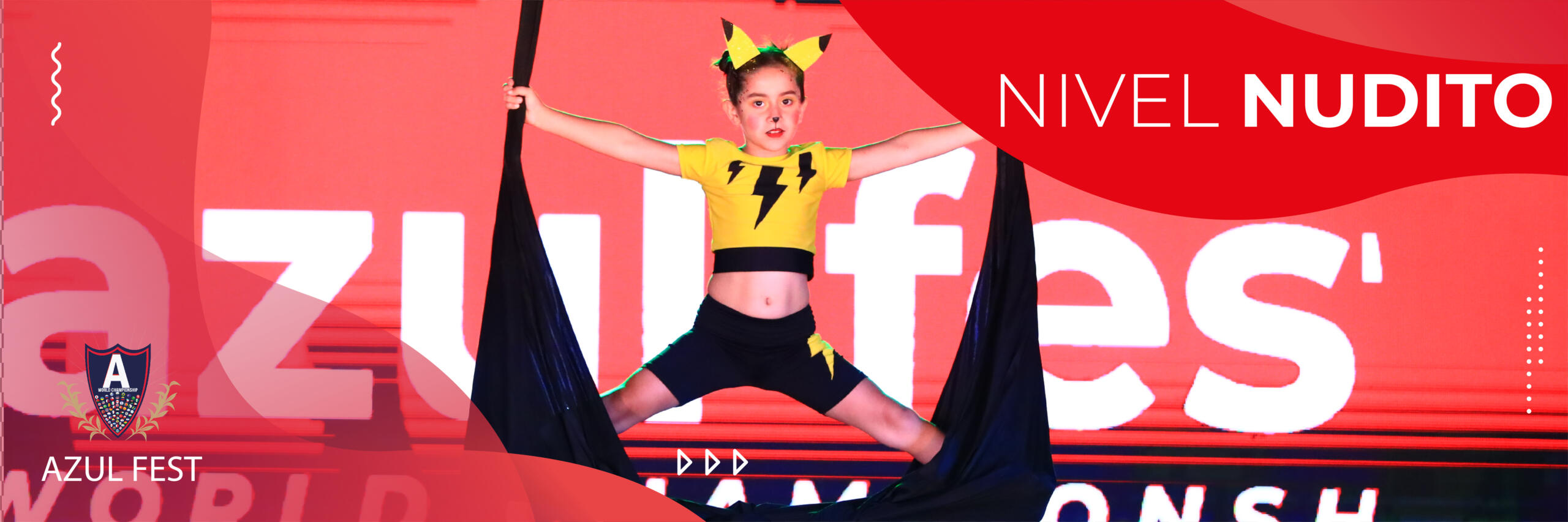
Aerial Silks – Beginner Level – Purpose:
The Beginner Category is designed for participants absolute beginners, who are taking their first steps in the aerial disciplines. Therefore, rules and evaluations should promote basic learning and motivation, avoiding advanced techniques that could discourage participation or create inequalities.
SOLO EVALUATION CRITERIA:
| CRITERIA | DESCRIPTION | MAXIMUM SCORE |
|---|---|---|
| Flexibility Figure | 1 flexibility figure demonstrating a basic level of range of motion. | 10 points |
| Escape or Fall | At least 1 simple and safe movement that ends in control. | 10 points |
| Combination of Exercises | Fluency in the setup, release, and transitions between at least 3 free elements. | 10 points |
| Endurance | Ability to maintain energy and control throughout the entire routine. | 5 points |
| Global Vision (Technical) | The quality, precision, and fluidity of the entire performance are evaluated. | 25 points |
| Global Vision (Difficulty) | Complexity of movements within the safe limits of the level. | 8 points |
| Total | 68 points |
DUOS/TRIOS EVALUATION CRITERIA:
| CRITERIA | DESCRIPTION | MAXIMUM SCORE |
|---|---|---|
| Flexibility Figure | At least 1 basic figure that demonstrates control and stability. | 10 points |
| Escape or Fall | At least 1 simple and safe movement that ends in control. | 10 points |
| Combination of Exercises | Fluidity in assembly, disassembly and transitions between figures. | 10 points |
| Synchronization | Coordination of movements between the members, achieving visual harmony. | 9 points |
| Endurance | Ability to maintain energy and control throughout the entire routine. | 5 points |
| Global Vision (Technical) | Quality and precision of movements, including control on the ground and in the air. | 16 points |
| Global Vision (Difficulty) | Complexity of movements within the safe limits of the level. | 8 points |
| Total | 68 points |
DEDUCTIONS
| Type of deduction | Description | Points to be deducted |
|---|---|---|
| Prohibited Movements | Climbs of any kind, using the silks without a knot. | -5 points |
| Minor Technical Errors | Swinging or moving outside the area protected by the mat. | -3 points |
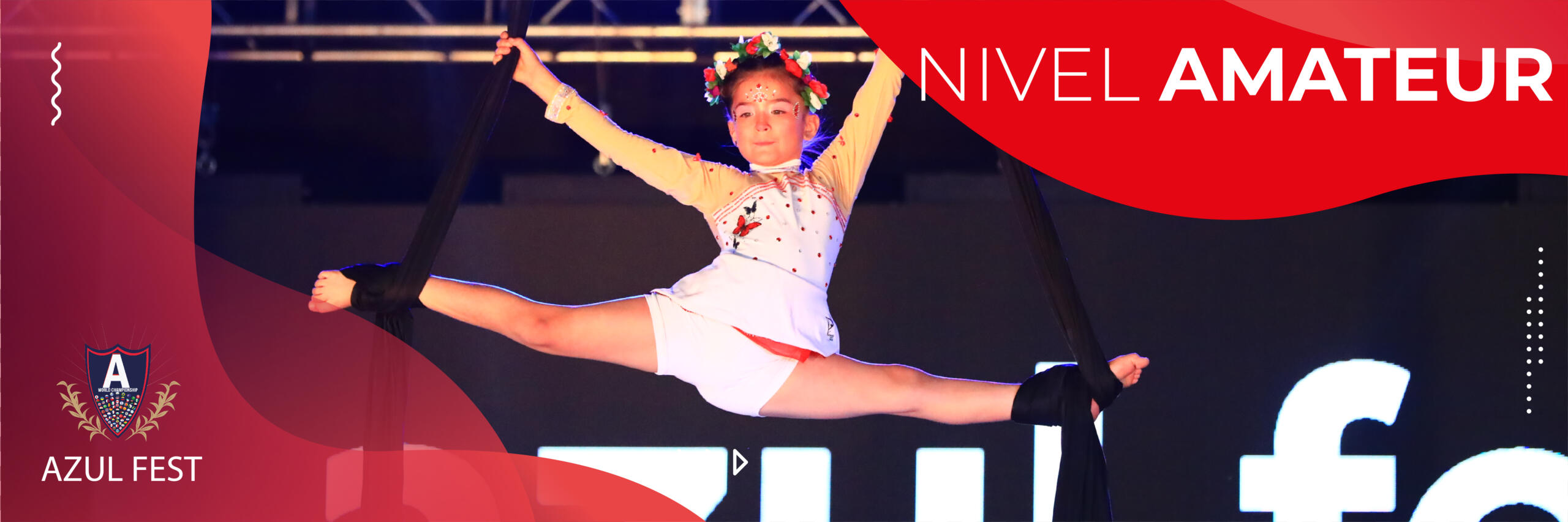
AERIAL SILKS – AMATEUR LEVEL – PURPOSE:
The Amateur Category is intended for participants who have passed the initial stage and aim to consolidate their technique and creativity in aerial disciplines. This level promotes the development of intermediate skills, ensuring a balance between learning, challenge, and safety. The rules and evaluation criteria are designed to encourage technical growth while avoiding advanced elements that could compromise the purpose of the category or create imbalances.
SOLO EVALUATION CRITERIA:
| CRITERIA | DESCRIPTION | MAXIMUM SCORE |
|---|---|---|
| Simple and Pure Investments | Simple inversions with bent arms and legs, clearly marking the inversion. The inversion cannot be released from another setup. | 8 points |
| Flexibility Figure | 1 flexibility element demonstrating a certain range of motion, either through leg extension or back flexibility. | 10 points |
| Figure of Strength | 1 low-complexity strength element performed with proper technique and safety, held for at least 2 seconds. | 10 points |
| Hip Key | Perform a Hip Key from any setup, taking into account that greater difficulty yields higher scoring. Additionally, a figure, exit, or drop must be executed from it. | 8 points |
| Escape or Fall | Execution of a single or double release or drop. | 8 points |
| Fluidity and Transitions | Fluency in the setup, release, and transitions between at least 3 free elements. | 12 points |
| Global Vision of Performance | The quality, precision, and fluidity of the entire performance are evaluated. | 12 points |
| Total | 68 points |
DUOS/TRIOS EVALUATION CRITERIA:
| CRITERIA | DESCRIPTION | MAXIMUM SCORE |
|---|---|---|
| Simple and Pure Investments | Inversions with bent legs and arms, clearly marked and executed simultaneously. | 7 points |
| Flexibility Figure | 1 low-complexity flexibility group figure demonstrating control and stability. | 9 points |
| Figure of Strength | 1 low-complexity group strength figure performed safely. | 9 points |
| Hip Key | Building at least one group figure from a waist lock, with fluidity. | 7 points |
| Escape or Fall | Execution of a simple escape or fall, coordinated between the members. | 7 points |
| Fluidity and Transitions | Fluidity in group assembly and disassembly, with dynamic and harmonious transitions. | 10 points |
| Synchronization | Precise coordination between members in timing, rhythm and execution of figures. | 9 points |
| Global Vision of Performance | Group technical quality, control on the ground and in the air, overall artistic connection. | 10 points |
| Total | 68 points |
DEDUCTIONS
| Type of deduction | Description | Points to be deducted |
|---|---|---|
| Prohibited Movements | Knee climbs, arm-only climbs, balances, armpit rolls, any type of dynamic movement, rolls, and planches. Drops or releases landing on hands or feet. Inversions with any limb fully extended. | -5 points |
| Technical Errors | Lack of control or clarity in inversions. Unintentional tangles and accidental drops. | -3 points |

Aerial Silks – Pre-Professional Level – Purpose:
The introduction of a new category called Pre-Professional, positioned between the Amateur and Professional categories, responds to a real need for growth, structure, and athletic development within a competition of Azul Fest’s magnitude.
First, this new category will allow to establish a clearer and more balanced technical progressionCurrently, the transition from Amateur to Professional involves a significant increase in difficulty, which in many cases leaves athletes feeling not fully prepared to compete at the Professional level, while also not identifying with the Amateur level. The Pre-Professional category will function as an intermediate transition stage, where athletes can incorporate greater technical difficulty, combinations, and demands in a gradual and safe mannerbefore taking the final step to the Professional level.
Likewise, this structure promotes greater comfort and confidence among athletesas it prevents an abrupt transition between categories. In this way, the Amateur level can remain more accessible and developmental, while the Pre-Professional level offers an advanced development stagepreparing the competitor both technically and mentally for the Professional level.
SOLO EVALUATION CRITERIA:
| CRITERIA | DESCRIPTION | MAXIMUM SCORE |
|---|---|---|
| Clear and Pure Investments | All inversions must be performed with either legs or arms fully extended, avoiding both extremities being bent or extended at the same time, and clearly marking the inversion. The inversion may not originate from another setup. | 10 points |
| Flexibility Figure | 2 low- to medium-complexity flexibility elements demonstrating a certain range of motion: 1 leg-based and 1 back-arch. | 10 points |
| Figure of Strength | 1 low- to medium-complexity planche performed with proper technique and safety, held for at least 2 seconds. | 10 points |
| Special Ascent | 1 special climb (a minimum of 2 climbs within the same sequence demonstrating a clear upward progression on the apparatus). | 10 points |
| Escape or Fall | Execution of a release or drop to hands, knee hooks, or feet (ankles). In the case of a drop to hands, it must include a lock, wraps, or foot locks. (In Azul Fest, the armpit roll is considered simply a release to hands.) | 10 points |
| Fluidity and Transitions | Fluency in setups, releases, and transitions between all elements of the performance. | 8 points |
| Global Vision of Performance | The technical quality, precision, and fluidity of the entire performance are evaluated. | 10 points |
| Total | 68 points |
DUOS/TRIOS EVALUATION CRITERIA:
| CRITERIA | DESCRIPTION | MAXIMUM SCORE |
|---|---|---|
| Clear and Pure Investments | All inversions must be performed with either the legs or the arms fully extended, avoiding both extremities being bent or extended at the same time, and clearly marking the inversion. The inversion may not originate from another setup. | 9 points |
| Flexibility Figure | 2 low- to medium-complexity flexibility elements demonstrating a certain range of motion: 1 leg-based and 1 back-arch. | 9 points |
| Figure of Strength | 1 low- to medium-complexity planche performed with proper technique and safety, held for at least 2 seconds. | 9 points |
| Special Ascent | 1 special climb (a minimum of 2 climbs within the same sequence demonstrating a clear upward progression on the apparatus). | 9 points |
| Escape or Fall | Execution of a release or drop to hands, knee hooks, or feet (ankles). In the case of a drop to hands, it must include a lock, wraps, or foot locks. (In Azul Fest, the armpit roll is considered simply a release to hands.) | 9 points |
| Fluidity and Transitions | Fluency in setups, releases, and transitions between all elements of the performance. | 7 points |
| Synchronization | Precise coordination between members in timing, rhythm and execution of figures. | 8 points |
| Global Vision of Performance | The technical quality, precision, and fluidity of the entire performance are evaluated. | 8 points |
| Total | 68 points |
DEDUCTIONS
| Type of deduction | Description | Points to be deducted |
|---|---|---|
| Prohibited Movements | Execution of re-grips, flips, roll-ups, inversions with all extremities either bent or fully extended, power elements, and balances without wraps or with foot locks on the feet or hands. | -5 points |
| Technical Errors | Lack of clear inversion marking. Unintentional tangles and accidental drops. | -3 points |

AERIAL SILKS – PROFESSIONAL LEVEL – PURPOSE:
The Professional Category this designed for artists with a intermediate-advanced technical level, which seek to combine technique and creativity. Here, flexibility figures with a significant bend and a minimum opening of 180° are expected. In addition, strength figures of medium complexity are included. Value is placed on fluidity in transitions, clarity in inversions, and a well-structured artistic presentation. This is an intermediate step that marks the beginning of progress to higher levels.
SOLO EVALUATION CRITERIA:
| CRITERIA | DESCRIPTION | MAXIMUM SCORE |
|---|---|---|
| Clear and Pure Investments | All inversions must be performed with either the legs or the arms fully extended, avoiding both extremities being bent or extended at the same time, except for inversions initiated from a prior swing, and clearly marking the inversion. The inversion may not originate from another setup. | 10 points |
| Flexibility Figure | 2 medium-complexity flexibility elements demonstrating a range of motion: 1 leg-based and 1 back-arch. | 10 points |
| Figure of Strength | 1 medium-complexity planche performed with advanced control and technique. 1 leg balance with wraps or a handstand balance. | 10 points |
| Special Ascent | 2 special climbs (a minimum of 2 climbs within the same sequence demonstrating a clear upward progression on the apparatus) | 10 points |
| Escape or Fall | Execution of a release or drop to hands, knee hooks, or feet (ankles). In the case of a drop to hands, it must NOT include a lock, wraps, or foot locks. (In Azul Fest, the armpit roll is considered simply a release to hands.) | 10 points |
| Dynamic Element | Execution of one dynamic element (it may be performed with a power assist). | 8 points |
| Global Vision of Performance | The technical quality, precision, and fluidity of the entire performance are evaluated. | 10 points |
| Total | 68 points |
DUOS/TRIOS EVALUATION CRITERIA:
| CRITERIA | DESCRIPTION | MAXIMUM SCORE |
|---|---|---|
| Clear and Pure Investments | All inversions must be performed by all participants with either the legs or the arms fully extended, avoiding both extremities being bent or extended at the same time, except for inversions initiated from a prior swing. They must be executed in coordination and clearly marked. The inversion may not originate from another setup. | 9 points |
| Flexibility Figure | 2 medium-complexity flexibility elements demonstrating a range of motion: 1 leg-based and 1 back-arch. Coordination in execution will be evaluated. | 9 points |
| Figure of Strength | 1 medium-complexity planche performed with advanced control and technique, and 1 leg balance with wraps or a handstand balance, maintaining alignment and body coherence among all participants. | 9 points |
| Special Ascent | 2 special climbs (a minimum of 2 climbs within the same sequence demonstrating a clear upward progression on the apparatus), performed simultaneously or in mirror, with clear and precise entry by all participants. | 9 points |
| Escape or Fall | Execution of a release or drop to hands, knee hooks, or feet (ankles) with control and coordination. In the case of a drop to hands, it must NOT include a lock, wraps, or foot locks. (In Azul Fest, the armpit roll is considered simply a release to hands.) | 9 points |
| Dynamic Element | Execution of a dynamic element performed in coordination (it may be performed with a power assist). | 7 points |
| Synchronization | Precise and sustained coordination in rhythm, timing, directions, and execution among all participants throughout the routine. | 8 points |
| Global Vision of Performance | The overall technical quality, precision, and fluidity of the entire performance are evaluated, including artistic coherence, stage connection, and apparatus control among the participants. | 8 points |
| Total | 68 points |
DEDUCTIONS
| Type of deduction | Description | Points to be deducted |
|---|---|---|
| Prohibited Movements | Execution of roll-ups (excluding the angel roll-up), inversions with both extremities bent or fully extended (except those executed with a clear swing), low-complexity flexibility elements, balances with foot locks or locks on the feet, and handstands without wraps or locks on the hands. Execution of two or more dynamic movements. | -5 points |
| Technical Errors | Lack of clear inversion marking. Unintentional tangles and accidental drops. Any dynamic movement that endangers the athlete’s safety. | -3 points |
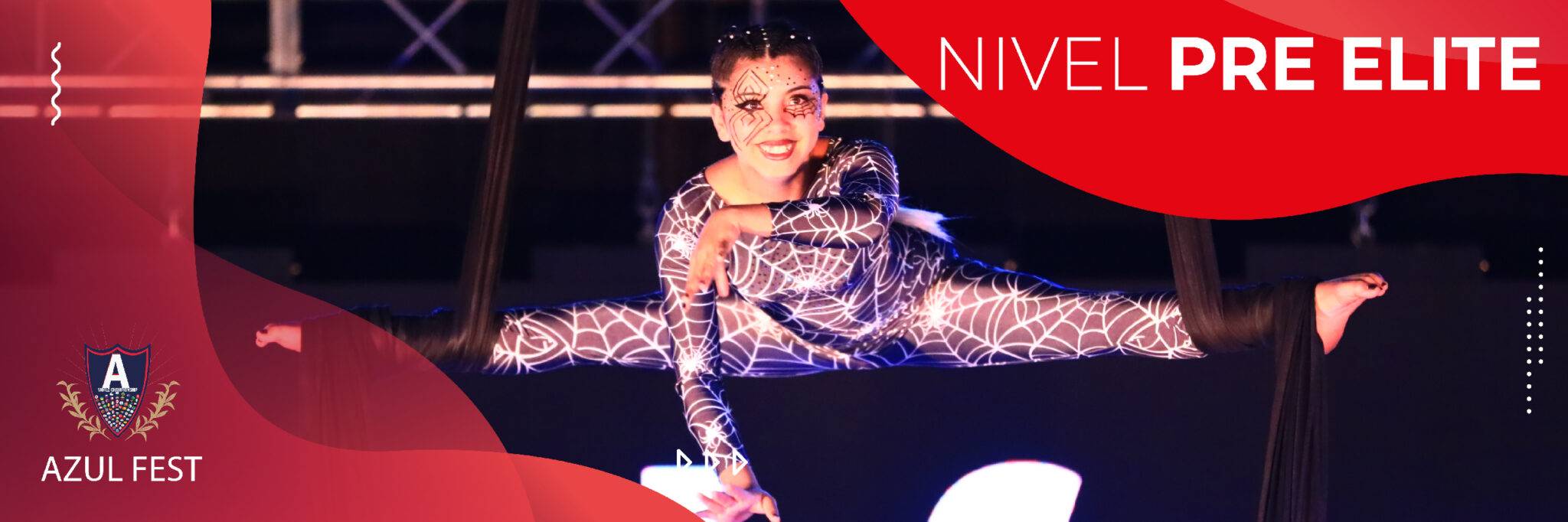
AERIAL SILKS – PRE ELITE LEVEL – PURPOSE:
The Pre Elite Category It is designed for artists with a advanced technical levelThis level requires greater complexity in flexibility and strength figures, as well as the incorporation of dynamic and fluid transitions. Participants must demonstrate figures that include a minimum 180° leg opening and highly complex arc figures. Pre-Elite is positioned as the bridge to the Elite category, combining technical and creative excellence.
SOLO EVALUATION CRITERIA:
| CRITERIA | DESCRIPTION | MAXIMUM SCORE |
|---|---|---|
| Clear and Pure Investments | All inversions must be performed in full extension, clearly marking at least one inversion. Inversions may not originate from another setup. | 10 points |
| Special Ascents | 2 mandatory climbs, at least one from knee hooks (a minimum of 2 climbs within the same sequence demonstrating a clear upward progression on the apparatus) | 10 points |
| Flexibility Figures | 2 medium- to high-complexity flexibility elements demonstrating a range of motion: 1 leg-based and 1 back-arch. | 10 points |
| Figures of Strength | 1 medium- to high-complexity planche performed with advanced control and technique. 1 leg balance from toes, foot locks (lock, catch), or a handstand balance. | 10 points |
| Dynamic Elements | 2 dynamic elements performed simultaneously. (Power assists are permitted but will not be counted as dynamic elements.) | 10 points |
| Roll Up | Execution of at least 1 roll-up of any type that completes a full 360° rotation and demonstrates a clear upward progression. | 8 points |
| Global Vision of Performance | The technical quality, precision, and fluidity of the entire performance are evaluated. | 10 points |
| Total | 68 points |
DUOS/TRIOS EVALUATION CRITERIA:
| CRITERIA | DESCRIPTION | MAXIMUM SCORE |
|---|---|---|
| Clear and Pure Investments | All inversions must be performed in full extension, clearly marking at least one inversion. Inversions may not originate from another setup. | 9 points |
| Special Ascents | 2 mandatory climbs, at least one from knee hooks (a minimum of 2 climbs within the same sequence demonstrating a clear upward progression on the apparatus) | 9 points |
| Flexibility Figures | 2 medium- to high-complexity flexibility elements demonstrating a range of motion: 1 leg-based and 1 back-arch. | 9 points |
| Figures of Strength | 1 medium- to high-complexity planche performed with advanced control and technique. 1 leg balance from toes, foot locks (lock, catch), or a handstand balance. | 9 points |
| Dynamic Elements | 2 dynamic elements performed simultaneously. (Power assists are permitted but will not be counted as dynamic elements.) | 9 points |
| Roll Up | Execution of at least 1 roll-up of any type that completes a full 360° rotation and demonstrates a clear upward progression. | 6 points |
| Synchronization | Precise coordination in rhythm, timing, and execution between both/all members throughout the routine. | 9 points |
| Global Vision of Performance | The technical quality, precision, and fluidity of the entire performance are evaluated. | 8 points |
| Total | 68 points |
DEDUCTIONS
| TYPE OF DEDUCTION | DESCRIPTION | POINTS TO DEDUCT |
|---|---|---|
| Prohibited Movements | Armpit roll within a linked dynamic combo (outside of this it is permitted), setup with a change of knee hooks, balance from arm or leg wraps. | -5 points |
| Technical Errors | Lack of clear inversion marking. Unintentional tangles and accidental drops. Any dynamic movement that endangers the athlete’s safety. | -3 points |
AERIAL SILKS – ELITE LEVEL – PURPOSE:
The Elite Category It is designed for artists with the more advanced and demanding technical level, which seeks to highlight excellence in technique, strength, flexibility, and creativity. This level represents the pinnacle of aerial disciplines, challenging participants to execute routines that combine complex movements with impeccable fluidity and an emotional connection to their performance.
At this level, participants must demonstrate absolute control over their body and the aerial element, integrating highly complex figures, innovative transitions, and dynamic exercises that reflect their experience and skills. Furthermore, each routine is expected to convey a coherent artistic narrative, raising the technical and expressive standards of the competition.
The goal is to promote a perfect balance between technical difficulty, precision, control, and artistic expression, defining the highest level of excellence in tournament sports.
SOLO EVALUATION CRITERIA:
| CRITERIA | DESCRIPTION | MAXIMUM SCORE |
|---|---|---|
| Clear and Pure Investments | All inversions must be performed in full extension, clearly marking at least one inversion. Inversions may not originate from another setup. | 8 points |
| Special Ascents | All climbs must be special and varied throughout the choreography. Repeating climbs in consecutive sequences is prohibited. | 8 points |
| Flexibility Figures | 3 high-complexity flexibility elements demonstrating a high degree of range of motion: 1 leg-based, 1 back-arch, and 1 free. | 9 points |
| Figures of Strength | 1 high-complexity planche performed with advanced control and technique without foot locks or locks on the hands. 1 leg balance from foot locks (lock, catch). | 9 points |
| Roll-Up | Execution of at least 2 roll-ups of any type, each completing a minimum of 2 full 360° rotations and demonstrating a clear upward progression. | 8 points |
| Dynamic Elements | Minimum of 1 combo of 3 dynamic elements performed simultaneously. (READ GLOSSARY CAREFULLY) | 8 points |
| Fluidity and Transitions | Fluency in setups, releases, and transitions between all elements of the performance. | 9 points |
| Global Vision of Performance | The technical quality, precision, and fluidity of the entire performance are evaluated. | 9 points |
| Total | 68 points |
DUOS/TRIOS EVALUATION CRITERIA:
| CONCEPTO | DETALLE | MÁX PUNTOS |
|---|---|---|
| Clear and Pure Investments | All inversions must be performed in full extension, clearly marking at least one inversion. Inversions may not originate from another setup. | 8 points |
| Flexibility Figures | 3 high-complexity flexibility elements demonstrating a high degree of range of motion: 1 leg-based, 1 back-arch, and 1 free. | 8 points |
| Figures of Strength | 1 high-complexity planche performed with advanced control and technique (without foot locks or locks on the hands). 1 leg balance from foot locks (lock, catch). | 8 points |
| Special Ascents | All climbs must be special and varied throughout the choreography. Repeating climbs in consecutive sequences is prohibited. | 8 points |
| Roll-Up | Execution of at least 2 roll-ups of any type, each completing a minimum of 2 full 360° rotations and demonstrating a clear upward progression. | 8 points |
| Dynamic Elements | Minimum of 1 combo of 3 dynamic elements performed simultaneously. (READ GLOSSARY CAREFULLY) | 8 points |
| Fluidity and Transitions | Fluency in setups, releases, and transitions between all elements of the performance. | 8 points |
| Synchronization | Precise and harmonious execution of movements in time, rhythm, and direction among all members. | 6 points |
| Global Vision of Performance | The technical quality, precision, and fluidity of the entire performance are evaluated. | 6 points |
| Subtotal: Technical Compliance, Correct Execution, and Difficulty | 68 points |
DEDUCTIONS
| TYPE OF DEDUCTION | DESCRIPTION | POINTS TO DEDUCT |
|---|---|---|
| Prohibited Movements | Performing any type of standard climb (e.g., Colombian climb, step climb, or with wraps). Armpit roll within a linked dynamic movement (outside of this it is permitted). Setup with a change of knee hooks, balance from toes, arm or leg wraps. Inversions with arms or legs bent. | -5 points |
| Technical Errors | Lack of clear inversion marking. Unintentional tangles and accidental drops. Any dynamic movement that endangers the athlete’s safety. | -3 points |
DUOS AND TRIOS
TECHNICAL EVALUATION AND SYNCHRONIZATION
The duo and trio categories in Acrotelas offer a unique challenge, combining individual talent with teamwork. Throughout all levels, from Nudito to Elite, evaluation focuses on the technical execution of figures, transitions, and inversions, tailored to the corresponding level. Furthermore, special importance is placed on synchronization, which reflects the ability of the members to work in harmony, creating a fluid and aesthetically striking connection.
Aspects such as flexibility and strength accuracy, the quality of the steps and inversions, and fluidity of the transitions are evaluated. In all cases, group coordination is a key factor that can elevate a routine, ensuring that the movements are executed with cohesion and visual clarity.
The ultimate goal is to achieve a balance between individual technique and group cohesion, highlighting creativity, connection with the aerial element, and artistic expression as fundamental pillars of a memorable performance.
AERIAL HOOP/TRAPEZE – AMATEUR LEVEL – PURPOSE:
The category Aerial Hoop/Trapeze – Amateur Levelr It is designed for artists in the early stages of technical and artistic development. The main focus of this level is to strengthen control, stability, and confidence in the execution of basic movements, while fostering creativity and fluidity in transitions. Priority is given to low-complexity figures that allow participants to demonstrate their connection with the element and progress in their technical mastery in a structured manner.
EVALUATION CRITERIA:
| CRITERIA | DESCRIPTION | MAXIMUM SCORE |
|---|---|---|
| Simple and Pure Investments | All simple inversions must be performed with arms and legs bent, clearly marking the inversion. The inversion may not originate from another setup. (Only in trapeze, straight arms will be allowed to invert from a swing) | 10 points |
| Flexibility Figure | 1 flexibility element demonstrating a certain range of motion, either through leg extension or back flexibility. | 10 points |
| Figure of Strength | 1 low-complexity strength element or planche | 10 points |
| Different grips/holds | 2 exclusive and different grips/holds where the hands do not have contact with the hoop/trapeze (e.g., 1 knee hook, elbows, armpits). | 10 points |
| Figure in Upper and Lower Contact | 1 figure in contact at both the bottom and top of the element. | 8 points |
| Exhaust | 1 simple release demonstrating technical control. | 8 points |
| Complete Turn | 1 full rotation that begins and ends in the same position. | 8 points |
| Global Vision of Performance | The technical quality, precision, and fluidity of the entire performance are evaluated. | 4 points |
| Total | 68 points |
DEDUCTIONS
| TYPE OF DEDUCTION | DESCRIPTION | POINTS TO DEDUCT |
|---|---|---|
| Prohibited Movements | Inversions with arms and legs fully extended (except on the trapeze bar, where arms may be extended when initiating from a swing), medium- to high-complexity planches, dynamic elements (re-grips, flips), and exiting the apparatus via a release. | -5 points |
| Technical Errors | Unintentional drops, swinging, and crossing beyond the mat boundary. | -3 points |
AERIAL HOOP/TRAPEZE – PROFESSIONAL LEVEL – PURPOSE:
The level Aerial Hoop/Trapeze – Professional Level It is designed for artists with advanced experience seeking to demonstrate technical control, precision, and artistic expression in their routines. At this level, flexibility figures with significant openings and strength figures that stand out for their stability and technique are valued. Additionally, mastery of turns, swings, and controlled exits is required, combined with fluid transitions that harmoniously connect all the elements. This level challenges participants to achieve a perfect balance between creativity and technical excellence, promoting the comprehensive development of their skills in handling the aerial element.
EVALUATION CRITERIA:
| CRITERIA | DESCRIPTION | MAXIMUM SCORE |
|---|---|---|
| Clear and Pure Investments | All inversions must be performed with either the legs or the arms fully extended, avoiding both extremities being bent or extended at the same time. The inversion may not originate from another setup. (Only in trapeze will extended limbs be allowed to invert from a swing.) | 10 points |
| Flexibility Figures | 2 medium-complexity flexibility elements demonstrating a range of motion: 1 leg-based and 1 back-arch. | 10 points |
| Figure of Strength | 1 medium-complexity plank performed with control and stability. | 10 points |
| Turns | 2 full rotations that begin and end in the same position; they do not need to be consecutive. | 10 points |
| Different Takes | 2 exclusive and different grips/holds where the hands do not have contact with the hoop/trapeze (e.g., knee hook, elbows, armpits, insteps, etc.). | 10 points |
| Balances | Combination of 2 different continuous hand balances (minimum 2 of each selected). | 4 points |
| Mandatory Regrip | At least 1 mandatory regrip of medium complexity. | 8 points |
| Global Vision of Performance | The technical quality, precision, and fluidity of the entire performance are evaluated. | 6 points |
| Total | 68 points |
DEDUCTIONS
| TYPE OF DEDUCTION | DESCRIPTION | POINTS TO DEDUCT |
|---|---|---|
| Prohibited Movements |
Inversions in full extension (except when initiated from a swing on the trapeze bar), using the apparatus as support to invert. – High complexity plates. High-complexity re-grips (excluding armpit-to-hands or elbows-to-hands transitions, and flips to the floor from any position to exit the apparatus). – Grips or holds where the only contact with the element is the neck, instep, or heel. |
-5 points |
| Technical Errors | Unintentional drops and any poorly executed release that endangers the athlete’s safety, swinging, and crossing beyond the mat boundary. | -3 points |
AERIAL HOOP/TRAPEZE – PRE ELITE LEVEL – PURPOSE:
The level Pre-Elite seeks to prepare artists for the more technically and artistically complex challenges they will encounter in the Elite category. It focuses on the execution of movements with control and fluidity, prioritizing technique, aesthetic connection, and confidence in transitions. This level incorporates combinations of skills that include strength and flexibility figures, controlled turns, and dynamic movements that challenge the participant's physical and artistic abilities, always maintaining a balance between difficulty and control.
EVALUATION CRITERIA:
| CRITERIA | DESCRIPTION | MAXIMUM SCORE |
|---|---|---|
| Clear and Pure Investments | All inversions must be performed with both the legs and the arms fully extended. | 10 points |
| Flexibility Figures | 2 medium- to high-complexity flexibility elements demonstrating a range of motion: 1 leg-based and 1 back-arch. | 10 points |
| Irons | 1 compulsory plank of medium or high complexity (on trapeze: 2 planks, at least 1 on ropes). | 10 points |
| Turns | 2 full rotations that begin and end in the same position, performed consecutively (minimum 2 of each selected). | 10 points |
| Different Takes | 3 different shots, where at least 1 is with heels or insteps. | 10 points |
| Swings | Combination of 2 different continuous hand balances (minimum 2 of each selected). | 4 points |
| Mandatory Regrip | At least 1 mandatory re-grip of medium or high complexity. | 8 points |
| Global Vision of Performance | The technical quality, precision, and fluidity of the entire performance are evaluated. | 6 points |
| Total | 68 points |
DEDUCTIONS
| TYPE OF DEDUCTION | DESCRIPTION | POINTS TO DEDUCT |
|---|---|---|
| Prohibited Movements | Inversions in full or partial flexion, using the apparatus as support to invert, and combinations of dynamic elements. (Armpit-to-hands and elbows-to-hands re-grips will not be counted in this category.) 1 instep, 1 heel, or neck. | -5 points |
| Technical Errors | Unintentional drops and any poorly executed release that endangers the athlete’s safety, swinging, and crossing beyond the mat boundary. | -3 points |
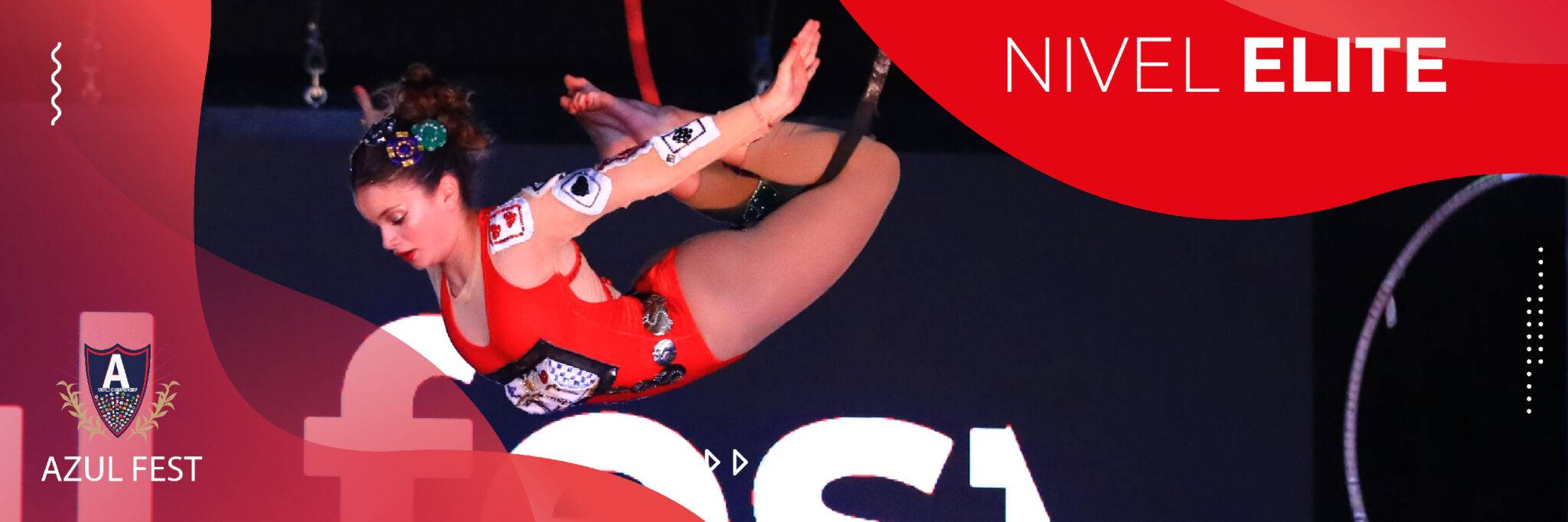
AERIAL HOOP/TRAPEZE – ELITE LEVEL – PURPOSE:
The category Elite It represents the highest technical level within the competitive Lyre and Trapeze circuit. It is intended for artists who master the discipline with precision, strength, flexibility, and profound stage awareness. At this level, impeccable execution of advanced figures, complex combinations, and highly difficult transitions is expected.
Priority is given to technical excellence, clarity of inversions, control of flight, and creative use of the stage space, fluidly integrating dynamic elements. Furthermore, the ability to surprise the audience with proposals that combine innovation, technical mastery, and a genuine emotional connection with the performance is valued.
EVALUATION CRITERIA:
| CRITERIA | DESCRIPTION | MAXIMUM SCORE |
|---|---|---|
| Clear Investments | All inversions must be performed in full extension using strength. | 8 points |
| Flexibility Figures | 3 high-complexity flexibility elements demonstrating a high degree of range of motion: 1 leg-based, 1 back-arch, and 1 free. | 8 points |
| Irons | 1 compulsory high-complexity plank (on trapeze: 2 planks, at least 1 on ropes). | 8 points |
| Static Balance | 1 static balance figure held for at least 2 seconds. | 8 points |
| Turns | Combination of 2 continuous and different spins, with a minimum of 2 of each selected spin. | 8 points |
| Balances | 3 different combined and continuous balances/swings. Not necessarily only hand-based. They must be continuous within the same section. Minimum 2 swings of each selected movement. | 8 points |
| Dynamic Elements | Minimum of 1 combo of 2 dynamic elements performed simultaneously. | 8 points |
| Tomas | 1 hold performed using the neck, heel, or instep, held for at least 2 seconds. | 6 points |
| Global Vision of Performance | The technical quality, precision, and fluidity of the entire performance are evaluated. | 6 points |
| Total | 68 points |
DEDUCTIONS
| Type of Deduction | Description | Points to Deduct |
|---|---|---|
| Prohibited Movements | Inversions performed with any part of the body flexed. | -5 points |
| Technical Errors | Unintentional tangles and accidental drops. Any dynamic movement that endangers the athlete’s safety. Swinging and crossing beyond the mat boundary. | -3 points |
DUOS
TECHNICAL EVALUATION AND PORTOR-FLYWHEEL CONNECTION
The duo categories on the acrobatics, lyre, and trapeze present a unique challenge, requiring close collaboration between the bearer and the flyer. At all levels, from Amateur to Elite, both individual technical skill and the ability to work in synchrony are evaluated, highlighting the fluid interaction between both members.
The aspects evaluated include the precise execution of flexibility and strength moves, the quality of transitions, connections, and disengagements, and the proper connection between the flyer and the carrier. Creativity and technical control in complex moves such as regrips, escapes, and continuous spins, as well as endurance and sustained energy throughout the routine, are key elements.
Synchronization and the combined use of aerial elements are essential to excel in this category, reflecting teamwork that combines strength, balance, and fluidity with unique artistic expression.
The ultimate goal is to achieve a harmonious balance between individual technique and group cohesion, consolidating the duo as a single organism that moves in unison, offering a striking and memorable visual experience.
AERIAL SILKS / AERIAL HOOP / TRAPEZE – DUO AMATEUR LEVEL
EVALUATION CRITERIA:
| CRITERIA | DESCRIPTION | MAXIMUM SCORE |
|---|---|---|
| Technical Investment | Inversion with legs and arms bent on the steering wheel in the hands of the carrier. | 8 points |
| Flexibility Figure | 1 figure of flexibility of the steering wheel on the carrier or 1 figure each, always on the same element. | 8 points |
| Figure of Strength | 1 force figure performed by the flyer, with support or stabilization by the carrier if necessary. | 8 points |
| Portor-Volante Connection | Clear coordination in support roles, assisted figures, and shared movements. Confidence, precision, and consistency in roles are valued. | 10 points |
| Coordinated Escape or Fall | Escape or fall executed by the steering wheel that begins in the element and ends in the carrier, with control. | 8 points |
| Fluidity and Transitions | A harmonious sequence of movements, connections, and changes in planes without abrupt interruptions, maintaining unity between both members. | 10 points |
| Synchronization | Precision and coordination in mirror movements, entrances and closures, maintaining the common rhythm between both members. | 8 points |
| Global Vision of Performance | Overall evaluation of the duo's technical and expressive performance, with scenic coherence, mastery of space, and control of the floor and air. | 8 points |
| Total | 68 points |
DEDUCTIONS
| TYPE OF DEDUCTION | DESCRIPTION | POINTS TO DEDUCT |
|---|---|---|
| Prohibited Movements | Hamstring raises, inversions with extended arms or legs, balances, medium or high complexity planks, dynamic exercises, re-grips, flips, and indentations. | -5 points |
| Technical Errors | Lack of control or precision of the steering wheel in the execution of figures. | -3 points |
| Fluency Errors | Transitions between movements without continuity or lack of connection between carrier and flyer. | -3 points |
| Interference in the element | Obstructing or interfering with the use of the element in an unintentional or disorganized manner, generating sloppiness or risks. | -5 points |
| Visual Incoordination | Executions at different times when they should have been simultaneous (inversions, increases, finals or other key synchronization moments). | -3 points |
| Unsafe use of the element | Both artists hanging from the same point without adequate load distribution or visual contact/control by the carrier. | -5 points |
AERIAL SILKS / AERIAL HOOP / TRAPEZE – DUO PROFESSIONAL LEVEL
EVALUATION CRITERIA:
| CRITERIA | DESCRIPTION | MAXIMUM SCORE |
|---|---|---|
| Technical Investment | Flyer inversion with bent arms or legs, performed while supported by the base’s hands, with clear technique and control. | 10 points |
| Flexibility Figures | 2 flyer elements of medium or high complexity: at least one must be performed on the base. | 10 points |
| Figures of Strength | 1 flyer strength element of intermediate or high difficulty (e.g., a planche) performed on the apparatus or in connection with the base. | 10 points |
| Special Ascent | 1 flyer climb demonstrating advanced technique, control, and precision, with support or assistance from the base. | 10 points |
| Escape or Fall | Flyer release or drop that originates from the apparatus and ends in controlled contact with the base. | 10 points |
| Fluidity and Transitions | Dynamic and harmonious connection between movements, highlighting the use of the apparatus by both participants without interruptions or lack of coordination. | 8 points |
| Synchronization and Connection Portor-Flywheel | Joint precision in timing, rhythm, and shared use of the apparatus, demonstrating cohesion and understanding between the base and flyer roles. | 6 points |
| Global Vision of Performance | Overall technical quality, stage presence, control, creative use of space, and aesthetic connection with the audience and between both participants. | 4 points |
| Total | 68 points |
DEDUCTIONS
| TYPE OF DEDUCTION | DESCRIPTION | POINTS TO DEDUCT |
|---|---|---|
| Prohibited Movements | Execution of prohibited advanced elements: re-grips, flips, uncontrolled roll-ups, inversions with both legs or arms fully extended (except when initiated from a swing), or using the base as the sole point of support. | -5 points |
| Technical Errors | Lack of control or precision by the flyer in advanced elements, including flexibility, strength, or takeoffs with imbalance. | -3 points |
| Errors in Fluency | Transitions between elements lacking continuity, and lack of precision in the connection between the base and flyer. | -3 points |
| Incorrect Exit | Exit to the ground without control or proper technique by the driver. | -3 points |
| Interference in the Element | Obstruction or crossing between participants when using the same apparatus, causing disorganization or risk. | -5 points |
| Unsafe Use of the Element | Both participants hanging from the same point without proper weight distribution or without visual control from the base. | -5 points |
AERIAL SILKS / AERIAL HOOP / TRAPEZE – DUO PRE ELITE LEVEL
EVALUATION CRITERIA:
| CRITERIA | DESCRIPTION | MAXIMUM SCORE |
|---|---|---|
| Technical Investment | Flyer inversion in full extension (legs or arms), clearly marked with proper technique, alignment, and control, executed on the base. | 10 points |
| Special Ascents | 2 different special climbs by the flyer, at least one from knee hooks or similar. Control, precision, and assistance from the base are evaluated. | 10 points |
| Flexibility Figures | 2 flyer elements of medium or high complexity: one back-arch and one leg-based, with at least one performed on the base. | 10 points |
| Figures of Strength | 2 flyer strength elements: a balance and a planche, performed with assistance or in contact with the base. | 10 points |
| Non-Manual Shots | 2 no-hands grips/holds by the flyer, using other parts of the body (armpits, knee hooks, heels, etc.). | 10 points |
| Mandatory Regrip | At least 1 mandatory re-grip with a controlled change of grip, demonstrating technical mastery and cohesion with the base. | 10 points |
| Global Vision of Performance | Overall technical quality, control, use of space, and connection with the base, the audience, and the aerial apparatus. | 8 points |
| Total | 68 points |
DEDUCTIONS
| TYPE OF DEDUCTION | DESCRIPTION | POINTS TO DEDUCT |
|---|---|---|
| Synchronization errors | Notable differences in simultaneous execution between the carrier and the midfielder. | -3 points |
| Technical errors | Lack of control or precision in figures, turns, inversions or transitions. | -3 points |
| Uncontrolled falls or escapes | Dismantling figures with loss of stability or uncoordinated falls. | -3 points |
| Incorrect use of the element | Poor use of airspace or inadequate contact with the element. | -3 points |
| Lack of team cohesion | Absence of visual or physical connection between the members of the duo. | -3 points |
| Absent compulsory exercise | A mandatory figure corresponding to the Pre Elite level is not included. | -5 points |
AERIAL SILKS / AERIAL HOOP / TRAPEZE – DUO ELITE LEVEL
EVALUATION CRITERIA:
| CRITERIA | DESCRIPTION | MAXIMUM SCORE |
|---|---|---|
| Technical Investment | Inversion of the steering wheel in full extension (legs or arms), marked with technique, alignment and control, executed on the carrier. | 8 points |
| Special Ascents | Two different special lifts from the shuttlecock, at least one from the hamstrings or similar. The carrier's control, precision, and assistance are evaluated. | 9 points |
| Flexibility Figures | 2 medium or high complexity figures of the steering wheel: one of an arch and another of legs, at least one made on the carrier. | 9 points |
| Figures of Strength | 2 steering wheel strength figures: balance and plank, performed with assistance or in contact with the carrier. | 8 points |
| Mandatory Technical Combination | Choreographed sequence that combines 3 different elements (strength, flexibility, regrip, escape, etc.) executed with fluidity and control. | 8 points |
| Dynamic Elements | At least a combo of 2 dynamics at the same time, with rhythm, projection and controlled execution. | 8 points |
| Non-Manual Shots | 2 hands-free grips on the steering wheel where contact is with another part of the body (armpits, hamstrings, heels, etc.). | 8 points |
| Global Vision of Performance | Overall technical quality, control, scenic use of space and connection with the performer, the audience and the aerial element. | 10 points |
| Total | 68 points | |
DEDUCTIONS
| TYPE OF DEDUCTION | DESCRIPTION | POINTS TO DEDUCT |
|---|---|---|
| Prohibited Movements | Inversions with extremities fully flexed, uncontrolled re-grips, armpit rolls in dynamic elements, and low-complexity planches. | -5 points |
| Technical Errors | Lack of control or precision in advanced figures, including flexibility or strength figures. | -3 points |
| Errors in Fluency | Disconnected movements or lack of fluidity in transitions. | -3 points |
| Lack of Opening or Marking | Flexibility figures with opening less than 180° for legs or 90° for arch. | -3 points |
| Incorrect Special Climb | Special climb that does not meet the technical requirements or that does not demonstrate control and precision. | -3 points |
| Incorrect Dynamic Exercises | Execution of dynamic elements that are uncontrolled, poorly connected, or do not meet the minimum requirement (2 dynamic elements performed simultaneously with projection and rhythm). | -5 points |
IMPORTANCE OF ARTISTIC DEVELOPMENT IN YOUR PERFORMANCE
In it Sports Tournament, In addition to highlighting your technical skills through the required figures, it's essential that you don't lose sight of the artistic development of your choreography. The fusion of technical and artistic aspects is what transforms a routine into a visually and emotionally impactful experience.
Artistic development includes elements such as connection with the audience, fluidity of movement, musical interpretation, and the ability to convey emotion through your performance. These aspects not only elevate the visual quality of your routine but also allow you to stand out from other performances by adding a unique and memorable touch.
Although the required exercises and technique predominate in the evaluation, the jury also evaluates creativity, the cohesion of the narrative in your choreography, and the connection you manage to establish with the aerial element. Therefore, remember that the balance between the technical and the artistic will be key to standing out.
EVALUATION CRITERIA:
| Criterion | General Description | Maximum Score |
|---|---|---|
| Character Development | Evaluation of the stage performance during the routine, considering the ability to sustain and transmit the character:
|
|
| Musicality | Assessment of connection and synchronization with music, including:
|
|
| Originality and Creativity | Innovation in the artistic approach, considering:
|
|
| Costume and Makeup | Visual impact of costumes and makeup, evaluating:
|
|
| Total | 32 points | |
DEDUCTIONS
| Type of Deduction | Detailed Description | Points to Deduct |
|---|---|---|
| Quickly let go of the initial concept | If the performer leaves the character before 10 seconds, removing key elements of the costume (cape, crown, etc.). | -3 points |
| Abrupt musical editions | If the interruption of the music creates an obvious interruption or affects the narrative or flow of the presentation. | -3 points |
| Wardrobe defects | If the costume has problems such as snags, looseness, or adjustments that compromise the routine or performance. | -2 points |
| Lack of artistic coherence | If the visual, musical and scenic elements do not achieve a harmonious integration that supports the overall concept. | -3 points |
4. OF THE CLASSIFIED CHOREOGRAPHIES
KEY FACT
For those choreographies eligible to participate in the World Cup, it is suggested that they modify their choreography based on the judges' feedback during the Qualifying Tournament. However, they may choose to change their costumes, routine, and music if they wish. Qualifiers cannot change the element or category they initially entered.
Participants in Duo or Trio choreographies that have qualified for the final stage can be replaced, but new choreographies CANNOT be added without having gone through a qualifying stage.
5. RESPONSIBILITY OF THE TEACHER OR CHOREOGRAPHER
The teacher is responsible for the entry and exit of his students on stage, and for reviewing the manner of exit and entry.
He is legally responsible for each of his students and himself, and must sign a participation agreement before the event and present the documentation, including photocopies of the under-18 age categories, with the authorization of the parents.
The teacher must have read and understood these regulations, which are addressed only to teachers who handle and use aerial acrobatics techniques with their students, understanding that they may be re-categorized depending on whether or not their presentation has the corresponding technique, and they may never dispute the jury's decision.
Disqualifications: The athlete or school in question will be immediately disqualified in cases of unsportsmanlike conduct or disrespect towards other athletes, jury members or any other person present at the event, at the discretion of the organization or the jury, as well as in cases of attitudes that incite violence, crime or illegal consumption on or off the stage at the discretion of the organization or the jury, attitudes with a high sexual content or that violate the morals and privacy of people at the discretion of the organization or the jury.
Athletes waive any legal action against The Organization, its members, members of the jury, The Theater or Establishment, its staff and related parties for any loss, damage, injury or harm that may arise from their participation in the competition or that is related to participation in the competition, including transportation to and from the venue where the competition is held.
6. FEES FOR CHOREOGRAPHY PRESENTATION
The attached registration form contains the fee for the presentation of the choreographies.
IMPORTANT: For categories with two or fewer participants, the decision to group categories by age is at the discretion of the local representative, who will be notified after the registration deadline and prior to the event. For example: If a single participant enters the "Amateur Children's Lyre Only 2" category and two participants enter the "Amateur Youth Lyre Only 1" category, they may be grouped as "Amateur Children's/Youth Lyre Only."
7. GLOSSARY OF AERIAL ACROBATICS
Flexibility Poses in Aerial Silks
Definition: At the Amateur Level, releases must be basic and performed from moderate height. Execution must be safe, with no risk of heavy impact and with a clear trajectory that allows for a controlled landing. High-speed releases or releases performed without visual contact with the apparatus are not permitted. 2 seconds to be considered valid.
Important Criteria:
- Simplicity: The figures must be basic and adapted to the corresponding level, without requiring advanced levels of technique.
- Elasticity: The ability to extend or arch the body is assessed, demonstrating flexibility in areas such as the legs or lumbar region.
- Control and Stability: The figure must be executed with precision, avoiding sudden movements or imbalances during the posture.
Flexibility – Nude Level
Definition: At this level, flexibility exercises are basic and focus on the participant's safety and stability. The leg spread or back curve should be moderate, demonstrating initial control over the element.
Flexibility – Amateur Level
Definition: This level requires low-complexity flexibility figures, with significant leg opening and greater control in the arch and extension positions.
Flexibility – Professional Level
Definition: Flexibility figures at this level should be of medium or high complexity, showing a minimum 180° leg opening and a significant curvature in the back.
Flexibility – Pre-Elite Level
Definition: At this level, flexibility figures must demonstrate high technical complexity and control, including advanced arch positions and superior leg opening.
Flexibility – Elite Level
Definition: The Elite level demands figures of maximum complexity and technical perfection, with leg openings of 180° or more and a complete curvature of the arch, performed with exceptional control and fluidity.
Flexibility Poses in Aerial Hoop and Trapeze
Definition: A flexibility figure in Lyre and Trapeze is a static posture that emphasizes muscular elasticity in different parts of the body, such as the legs, back, and arms. These figures must be held in a stable position for at least 2 seconds to be considered valid.
Important Criteria:
- Elasticity: The ability to extend or arch the body is assessed, demonstrating flexibility in areas such as the legs, back, and lumbar region.
- Control and Stability: The figure must be executed with precision, avoiding sudden movements or imbalances.
- Aesthetic Harmony: The figures must reflect a visual and physical balance appropriate to the technical level.
Flexibility – Amateur Level
Definition: This level includes basic flexibility figures that demonstrate initial control and stability, with a moderate leg spread and a simple back bend.
Flexibility – Professional Level
Definition: At this level, flexibility figures require greater technical complexity, with a minimum leg opening of 180° and a significant arch in the back.
Flexibility – Pre-Elite Level
Definition: Figures at this level must demonstrate advanced control, with leg openings greater than 180° and arc positions with high technical complexity.
Flexibility – Elite Level
Definition: This level demands figures of maximum complexity and technical perfection, with extreme openings and pronounced arcs performed with exceptional control and fluidity.
Investments in Aerial Silks
Definition: An inversion is a strength movement that involves changing the body's position from a head-up position suspended solely by the hands to an inverted position with the head facing down. For the movement to be valid, no foot assistance or contact with any other part of the body is permitted during execution. This change of position must be performed with control, strength, and technique appropriate for the category.
Important Criteria:
- Body Control: During the performance, the acrobat must maintain absolute control of the movement without losing body alignment.
- Execution Technique: The inversion should be performed solely with the strength of the hands and arms, without additional support.
- Final Stability: The inverted position must be stable and maintain body alignment to be considered valid.
Investment – Amateur Level
Definition: A strength movement that involves moving from a head-up position, suspended only by the hands, to an inverted position with the head facing down. At this level, both limbs (legs and arms) are allowed and required to be flexed.
Investment – Professional Level
Definition: A strength movement that involves moving from a head-up position, suspended only by the hands, to an inverted position with the head facing down. At this level, a combination of straight or bent legs or arms is permitted.
Investment – Pre-Elite Level
Definition: A strength movement that involves moving from a head-up position, suspended only by the hands, to an inverted position with the head facing down. This requires full arm extension, allowing for bent legs.
Investment – Elite Level
Definition: A strength movement that involves moving from a head-up position, suspended only by the hands, to an inverted position with the head facing down. This level requires full extension of both arms and legs.
Aerial Hoop/Trapeze Investments
Definition: An inversion on hoop/trapeze is an acrobatic movement that involves changing the position of the body, going from being upright with the head above and the body suspended on the apparatus, to being upside down with the head pointing downward. For the movement to be valid, it must be performed with control, strength, and technique, according to the level of the category.
Important Criteria:
- Body Control: During the performance, the acrobat must maintain absolute control of the movement, ensuring proper alignment.
- Execution Technique: The inversion must be performed using only body strength and contact with the element.
- Final Stability: The inverted position must be stable, maintaining precise alignment to be considered valid.
Investment – Amateur Level
Definition: Movement in which an inversion is performed with both limbs fully flexed. This level focuses on initial control, requiring no additional body support beyond contact with the object.
Investment – Professional Level
Definition: A movement that involves an inversion with a combination of flexed and extended limbs. At this level, more advanced control is required to maintain alignment and fluidity of the movement.
Investment – Pre-Elite Level
Definition: Movement in which an inversion is performed with both limbs fully extended. At this level, an initial swing is permitted to facilitate the inversion.
Investment – Elite Level
Definition: A movement in which an inversion is performed with both limbs fully extended and without swinging. This level requires absolute control and technical perfection throughout the entire movement.
Strength Figures and Planks in Aerial Silks
Definition: Power moves and planks are movements that highlight the acrobat's ability to hold challenging positions with absolute body control. Technique, stability, and endurance are essential to demonstrate mastery in these moves.
Important Criteria:
- Body Control: During the performance, the acrobat must maintain absolute control of the body.
- Stability: The figures must be performed in a stable manner and without unnecessary movements.
- Endurance: The figure must be held for at least 2 seconds to be valid.
Strength Figure – Amateur Level
Definition: At the amateur level, strength figures include basic positions that demonstrate control and stability, but do not require a high technical level.
Strength Figure – Professional Level
Definition: At the Professional level, strength figures include positions of medium complexity, requiring advanced control and precise technique.
Plank – Pre-Elite Level
Definition: At the Pre-Elite level, the performance of more technically complex planks is expected, demonstrating strength and precision in body control.
Plank – Elite Level
Definition: At the Elite level, planks are highly complex moves that require a perfect balance of technique, strength, and control, representing the highest level of difficulty.
Figures of Strength on Hoop and Trapeze
Definition: Strength figures on hoop and trapeze are positions that require the use of upper body and core muscles to support and stabilize the body on the aerial apparatus. These figures highlight control, endurance, and proper body alignment in the air.
Important Criteria:
- Control and Stability: The figure must be maintained without oscillations, with the body aligned.
- Use of Force: Correct muscle activation is assessed to maintain posture.
- Aesthetic Form: The figure must be executed with precision, avoiding postural compensations.
Strength Figure – Amateur Level
Definition: At the Amateur level, strength figures require stability in basic positions, without the need to support the body with limited support points or in advanced hangs. Partial support on the lyre or trapeze is permitted.
Strength Figure – Professional Level
Definition: At this level, strength figures include medium-complexity postures where the body must be held in positions with fewer support points, maintaining stable control in the air.
Strength Figure – Pre-Elite Level
Definition: At this level, advanced strength figures are required, involving superior body control in the air, with positions that require intense muscular work and prolonged stability.
Strength Figure – Elite Level
Definition: At this level, you will be expected to perform highly complex figures that require a combination of maximum strength, complete balance control, and prolonged stability in the air.
Falls
General Definition: A tumble is an acrobatic movement in which the body moves rapidly over a long distance, in free fall, without changing planes. This movement must be performed in a controlled and safe manner to ensure visual impact and proper technique.
Important Criteria:
- Height and Trajectory: The displacement must be sufficient to be considered a fall, with a minimum of one meter at initial levels.
- Control: It is essential to finish the fall with complete control of the body and posture, ensuring stability in the transition.
- Security: Correct technique is essential to avoid risks and ensure safe development of the movement.
Fall – Nudito Level
Definition: At this level, the landing is a simple and safe movement designed for beginners. It should be performed from a moderate height and concluded with clear posture control. Landings at this level aim to introduce the participant to the basic principles of the movement, prioritizing technique and safety.
Fall – Professional Level
Definition: At this level, falls must be made exclusively onto hands or feet, meeting the requirements established in the regulations. Long trajectories and proper technical execution are valued. Falls must demonstrate technical and artistic mastery, ensuring a significant visual impact without compromising safety.
Grips/holds on the Aerial Hoop and Trapeze
Definition: **Grips on hoop and trapeze** are specific body contact points with the aerial apparatus that allow for the safe and controlled execution of figures and transitions. Proper placement, stability, and control in each grip are evaluated.
Important Criteria:
- Correct Location: The sockets must be placed at the appropriate points on the body and the element, avoiding incorrect positions that could compromise safety.
- Stability and Control: Absolute control is required in the execution of each shot to avoid sudden movements or unexpected slips.
- Variety and Technique: At more advanced levels, the variety of shots and the acrobat's ability to use them fluidly and technically will be evaluated.
Grips/Holds – Amateur Level
Definition: At the amateur level, holds should be basic and secure, using primarily hand, hamstring, and armpit grips, without the need for complex supports.
Grips/Holds – Professional Level
Definition: At the Professional level, holds should include more stable grips, allowing for fluid transitions between figures. This includes single hamstring holds and combination holds with armpits or elbows.
Grips/Holds – Pre-Elite Level
Definition: At this level, shots must be diverse and demonstrate advanced technical control. Shots on heels, insteps, or a single armpit are required, demonstrating precision and stability.
Grips/Holds– Elite Level
Definition: At the Elite level, the shots must be of maximum complexity, including minimal support points such as the neck, heel, or instep. Absolute control and fluidity in transitions without loss of stability are expected.
Hoop and Trapeze Turns
Definition: Hoop and trapeze turns are movements that involve rotating the body on or around the element. These can be performed in different positions and speeds, demonstrating control, fluidity, and technique in the execution.
Important Criteria:
- Spin control: The stability and alignment of the body during rotation is assessed.
- Fluency: The movement must be performed continuously without sudden interruptions.
- Execution technique: Body positions and proper use of momentum are assessed.
Turns – Amateur Level
Definition: At the amateur level, turns are basic and focus on the correct execution of momentum and control of the body axis.
Turns – Professional Level
Definition: At the Professional level, turns require greater speed control and precision in body alignment.
Spins – Pre-Elite Level
Definition: At this level, turns must be executed with advanced technique, maintaining a constant rhythm and absolute control.
Spins – Elite Level
Definition: At the Elite level, turns must be dynamic and fluid, showing a perfect combination of speed and precision.
Figure in Upper and Lower Contact
A figure with upper and lower contact on hoop and trapeze is a static position in which the aerialist establishes two points of support simultaneously:
- Top touch point: Generally with the hands or any part of the body in the upper area of the device.
- Lower contact point: Normally with the feet or legs in the lower part of the device.
This figure allows for a balanced weight distribution and requires a precise control to maintain stability and body alignment.
Important Criteria:
- Stability: The figure must be maintained for at least 2 seconds without oscillations.
- Body alignment: The body must be correctly aligned for the posture to be aesthetically and technically valid.
- Weight distribution: The force must be balanced between the upper and lower point of contact.
- Security: The execution must be carried out with adequate control, avoiding sudden movements or destabilization of the device.
Upper and Lower Contact Figure – Amateur Level
Definition: At this level, contact figures must be basic and accessible, allowing for easy weight distribution without requiring extreme flexibility or advanced positions. The acrobat is expected to achieve stability with secure touchpoints and controlled in the device.
Release on Aerial Hoop and Trapeze
Definition: A exhaust In Hoop and Trapeze, this is a movement in which the acrobat descends from an elevated position on the apparatus to a lower position, utilizing a change of grip or controlled release of the body. It is executed fluidly and with technical control, allowing for a safe transition within the routine.
Important Criteria:
- Movement Control: The release must be executed with a stable exit, avoiding sudden or uncontrolled falls.
- Defined Exit Point: The acrobat must initiate the release from a fixed and stable position on the apparatus.
- Secure Reception: The finish must include a check on arrival, maintaining body alignment.
- Fluidity in Transition: The movement must be harmoniously integrated into the routine without generating abrupt pauses.
Release – Amateur Level
Definition: At the amateur level, escapes must be basic and performed from positions of moderate height. The execution must be safe, with no risk of strong impact and a clear trajectory that allows for a controlled landing. High-speed escapes or escapes without visual contact with the apparatus during execution are not permitted.
REGULATORY CLARIFICATION – AZUL FEST WORLD CHAMPIONSHIP
Armpit Roll
The Armpit Roll generates a complete rotation of the body (360° turn), but is not considered a flip in the official Azul Fest regulations.
This move is classified as a handstand, due to its low technical complexity and comparatively low risk.
For this reason, the Armpit Roll is only permitted at the Professional level, within the handstand category, and does not count as a dynamic flip for the purposes of judging or fulfilling mandatory movements.
Official Glossary of Dynamics – Azul Fest 2025
What are dynamics?
Within the technical framework of the Azul Fest Sports Tournament, dynamic is understood as all movements that involve aerial transition, change of plane or axis, or manipulation of the body in motion, which require coordination, strength, projection and technical control.
These elements may include complete turns, grip changes, acrobatic sequences, moving entrances and exits, among others.
Dislock – Aerial Silks – Pre-Elite and Elite Levels
lnlock – Aerial Silks – Pre-Elite and Elite Levels
Armpit to Hand Regrip (with Booster) – Crotch Grips – Pre-Elite and Elite Levels
Top-Down Regrip – Crotchets – Pre-Elite and Elite Levels
Regrip from Above to Armpits with Back Roll – Crotchets – Pre-Elite and Elite Levels
Front 360 – Aerial Silks – Pre-Elite and Elite Levels
Enhancer + Regrip from Armpits to Armpits – Aerial Silks – Pre Elite and Elite Levels
Elbow Pirouette – Aerial Silks – Pre-Elite and Elite Levels
Dynamic Combo – 3 Dynamics in 1 Time – Crotchets – Elite Level
We are now available to answer any questions you may have.
Thank you very much for trusting us azul fest